I’ve planned a lot of trips. Driven the Mosel. Stood at Patton’s grave in Luxembourg. Watched the sun come up over the Matterhorn. Eaten my way through Bavaria and walked the cobblestones of more medieval German towns than I can count.
But there’s a trip I haven’t taken yet that I think about more than most of the ones I have.
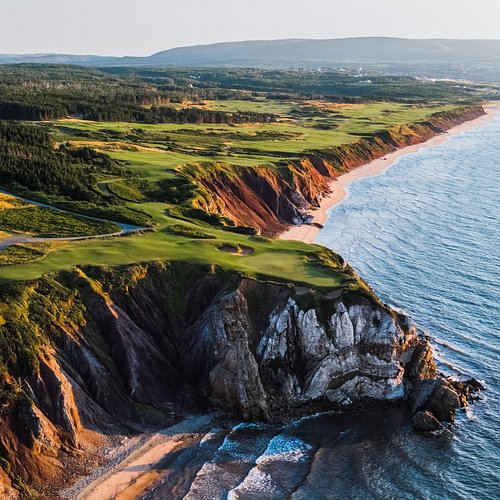
Nova Scotia. Cabot Cliffs.
Cabot Ciffs Golf
I’ve never set foot on the course. But I know exactly what it feels like — or at least I know what it’s supposed to feel like, and everything I’ve seen and read tells me the reality doesn’t disappoint.
Cool air. Not crisp-fall-morning cool. Atlantic Ocean cool. The kind that gets into your jacket and stays there. Salt in the air. The kind of wind that doesn’t apologize. And then the course itself — sitting on the cliffs above the ocean, the fairways dropping into ravines, the water everywhere you look. Eighteen holes that don’t let you forget for a single second where you are.
That’s the thing about the best golf destinations. They’re not just about the golf. They’re about being somewhere so specific, so irreplaceable, that the round becomes inseparable from the place. Pebble Beach is like that. St. Andrews is like that. Cabot Cliffs, from everything I know, is like that.
On the Cliffs.
The way I’m building this trip in my head — a few days on the course, then a private charter out of the harbor for tuna fishing. The Atlantic is serious fishing country up there. Then a few days just exploring the coastline. The small towns, the fishing villages, the food. Nova Scotia has that same quality I love about the European places I keep going back to — it doesn’t perform for you. It just is what it is, and what it is happens to be remarkable.
I’m going. The question is just when — and who’s coming with me.
If Nova Scotia golf is on your list too, let’s talk. I’m already doing the research and I’d rather plan it for two than just keep thinking about it.
Here’s something I’ve noticed after years of traveling through Europe — and six years of actually living there.
Most Americans do Europe wrong.
Not because they go to the wrong places. The wrong places don’t really exist. Paris is Paris. Rome is Rome. The Amalfi Coast looks exactly like the pictures. None of that is the problem.
The problem is the pace.
I’ve watched people move through a medieval German village like they’re checking it off a list. Quick photo at the market square, back on the bus, next stop in forty minutes. They were there. Technically. But they didn’t see the guy at the Imbiss who’s been selling bratwurst from the same corner for thirty years. They didn’t duck into the doorway of the church that isn’t in any guidebook but has been standing since the 1300s. They didn’t slow down enough to get lost — and getting lost in a place like Bernkastel-Kues or Trier or the Mosel Valley is how you find the things that actually matter.
Europe rewards patience. It rewards curiosity. It rewards the traveler who is comfortable being a stranger in a strange land — not anxious to get back to something familiar, but genuinely interested in what’s different.
The shop keeper who speaks no English but wants to show you something in the back. The family-run restaurant where the menu is handwritten and you have to point at what the table next to you is eating. The afternoon that turns into an evening because the wine was good and nobody wanted to leave.
That’s not an accident. That’s what European travel is supposed to feel like.
When I build an itinerary, I don’t fill every hour. I don’t schedule back-to-back attractions. I build in the slow parts — the long lunches, the unplanned afternoons, the roads that take longer but go past something worth seeing. Because the clients who come back to me, the ones who book a second and third trip, they’re not the ones who checked off the most cities.
They’re the ones who actually showed up.
Europe will still be there next year. Slow down enough to see it properly this time.
We’d already done Zermatt. The Matterhorn was behind us — and if you’ve stood at the base of that thing on a clear morning, you know there’s not much that follows it that feels quite as dramatic. We were heading north toward a chalet in the Alps, a few nights before pushing on to Munich. Good roads, good company, no particular hurry.
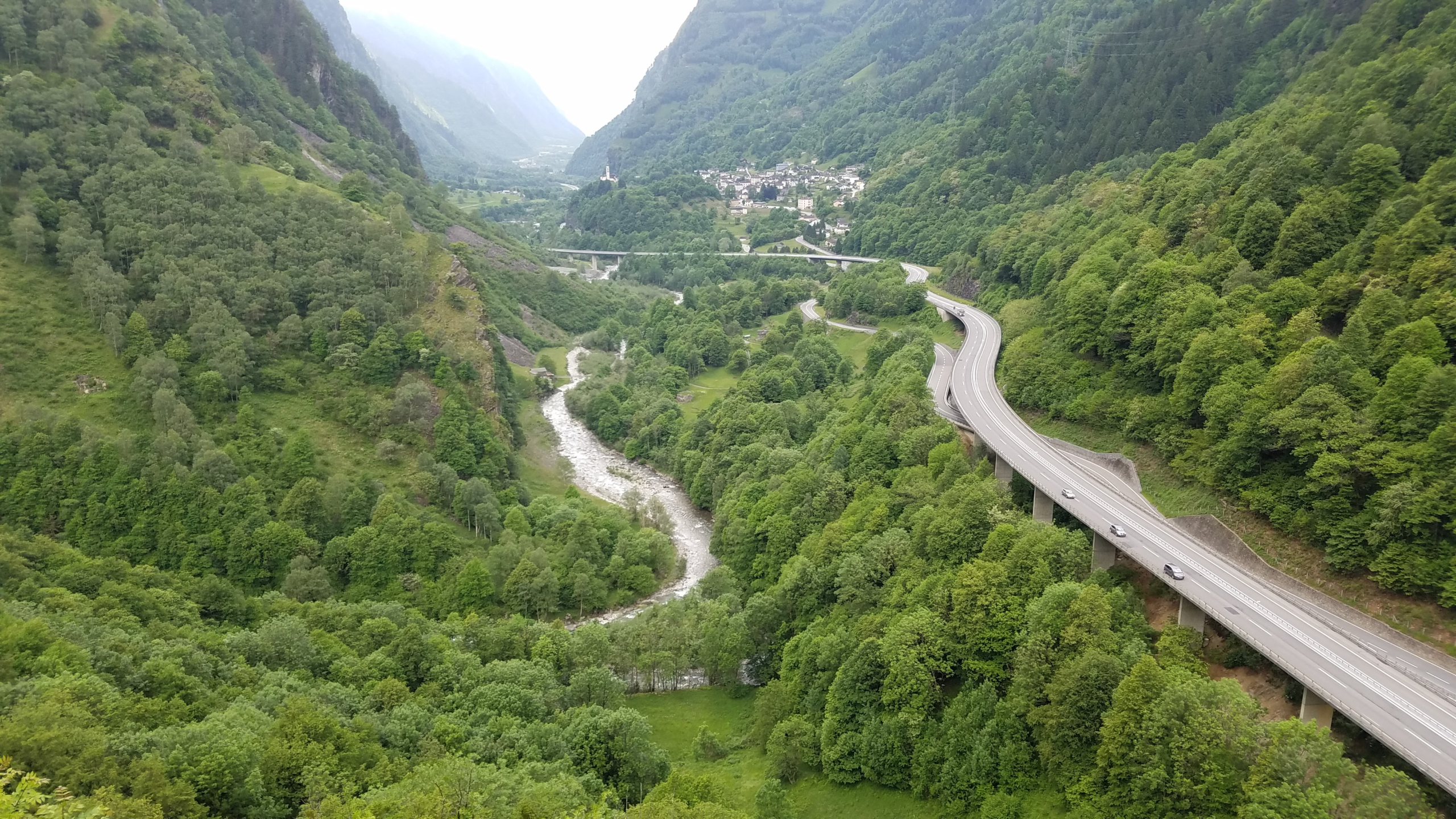
Then we rounded a curve somewhere in the Val Mesocco and the whole valley opened up.
I don’t mean a nice view. I mean the kind of view where you take your foot off the gas without deciding to. A massive valley floor, the mountains stacking up on either side, and sitting right in the middle of it — the ruins of a castle. Castello di Mesocco. Towers still standing. Walls crumbling back into the hillside the way old things do when nobody’s in a hurry to fix them.
We found the dirt road. I don’t even remember who spotted it first.
View from the top of Mesocco Castle
We spent two hours up there. No tour guide. No gift shop. No other tourists. Just the wind, the stone, and whatever it is you feel when you’re standing somewhere that’s been standing for 800 years and most people drive right past it.
The valley below Castello di Mesocco – worth every minute of the detour.
That’s the thing about Switzerland — and about Europe in general. The postcard version is real. Zermatt is stunning. The Matterhorn delivers. But the stuff that stays with you, the moments you’re still talking about years later, those usually happen when you weren’t trying.
You don’t find places like Castello di Mesocco on a highlights tour. You find them because you left room in the day for something unplanned. Because you took the mountain road instead of the highway. Because somebody said “what’s that?” and you actually stopped.
That’s the kind of travel I build itineraries around. Not just the destinations — the space between them.
If you’re planning a Switzerland trip and want to know which roads to take, I know a few.